


Gunnar Aagaard Andersen
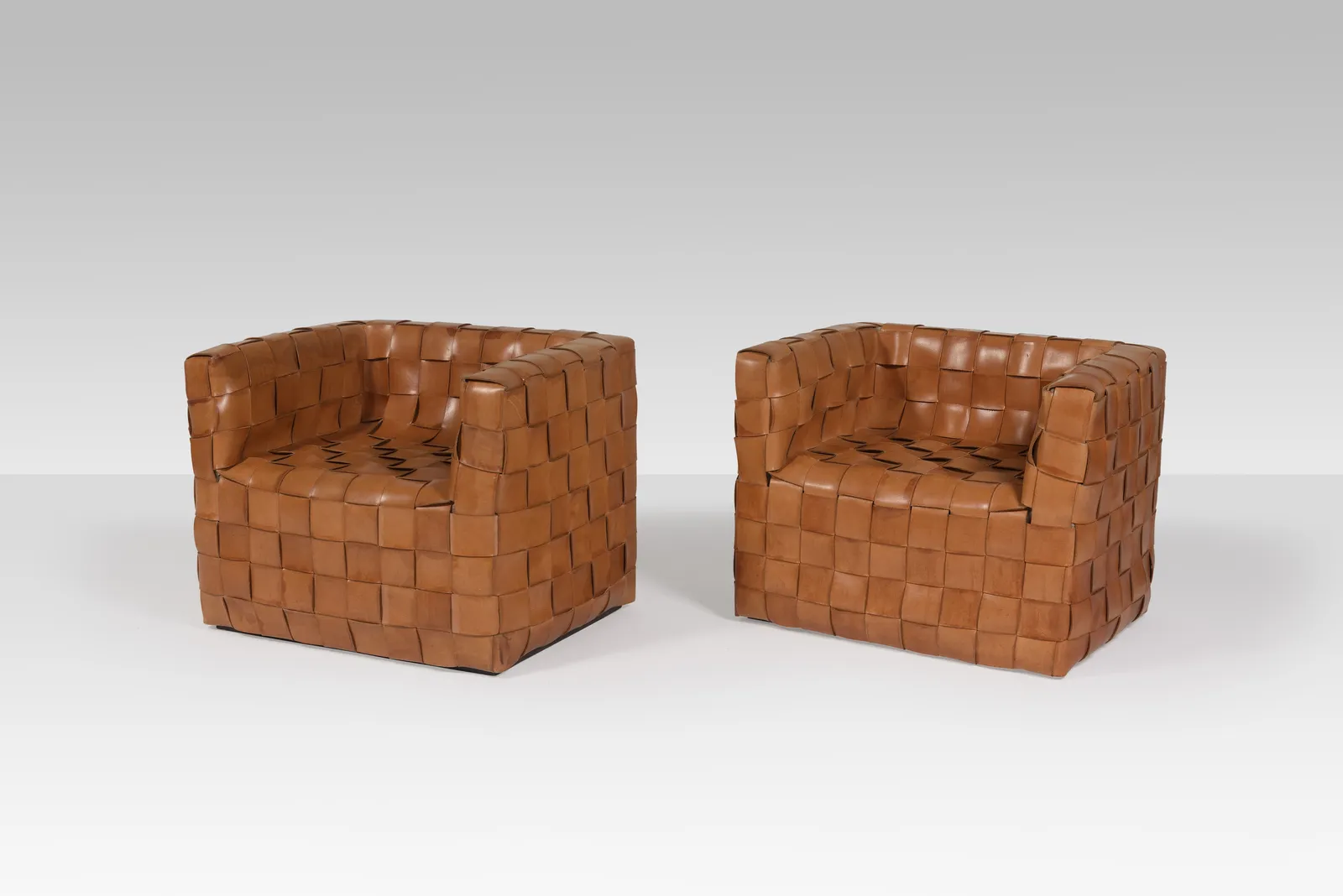
Pair of square armchairs, 1980
Woven girths of patinated natural leather
58 x 76 x 58 cm
22 7/8 x 29 7/8 x 22 7/8 in
22 7/8 x 29 7/8 x 22 7/8 in
ed. Ivan Schlechter
Further images


Gunnar Aagaard Andersen (1919-1982) worked as a visual artist, architect, graphic and interior designer, scenograph, and composer. He was a member of the artist group Linien II from the late...
Gunnar Aagaard Andersen (1919-1982) worked as a visual artist, architect, graphic and interior designer, scenograph, and composer. He was a member of the artist group Linien II from the late 1940s to the early 1950s. During the same period, he resided in Paris. He was a professor at the Academy of Fine Arts in Copenhagen from 1972-82 and received the Eckersberg and Thorvaldsen Medaillen. His works can be found in many public and private collections, including the Museum of Modern Art, New York.
One of Gunnar Aagaard Andersen's most notable achievements was his involvement in the design of the Louisiana Museum of Modern Art, Denmark. He played a crucial role in shaping the museum's architecture and interior design, blending art and architecture seamlessly.
As a furniture designer, Andersen's creations gained international recognition and continue to be sought-after collector's items. His chairs, tables, and cabinets often showcased innovative use of materials, such as wood, metal, and upholstery, while maintaining a strong focus on functionality and ergonomic comfort.
Today, his original vintage furniture pieces are highly valued and cherished as symbols of Danish design excellence and artistic innovation.
One of Gunnar Aagaard Andersen's most notable achievements was his involvement in the design of the Louisiana Museum of Modern Art, Denmark. He played a crucial role in shaping the museum's architecture and interior design, blending art and architecture seamlessly.
As a furniture designer, Andersen's creations gained international recognition and continue to be sought-after collector's items. His chairs, tables, and cabinets often showcased innovative use of materials, such as wood, metal, and upholstery, while maintaining a strong focus on functionality and ergonomic comfort.
Today, his original vintage furniture pieces are highly valued and cherished as symbols of Danish design excellence and artistic innovation.