





George Nakashima USA, 1905-1990
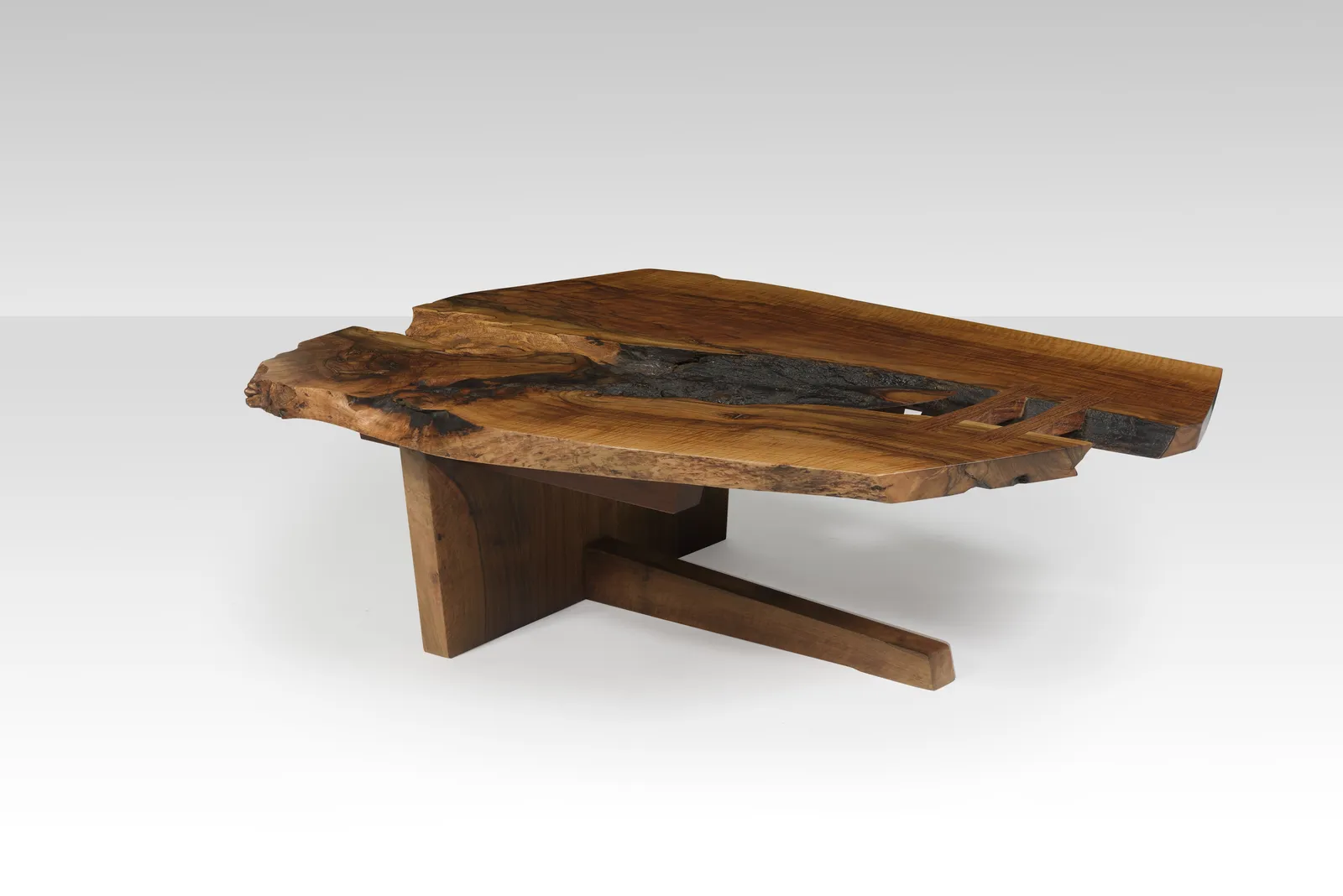
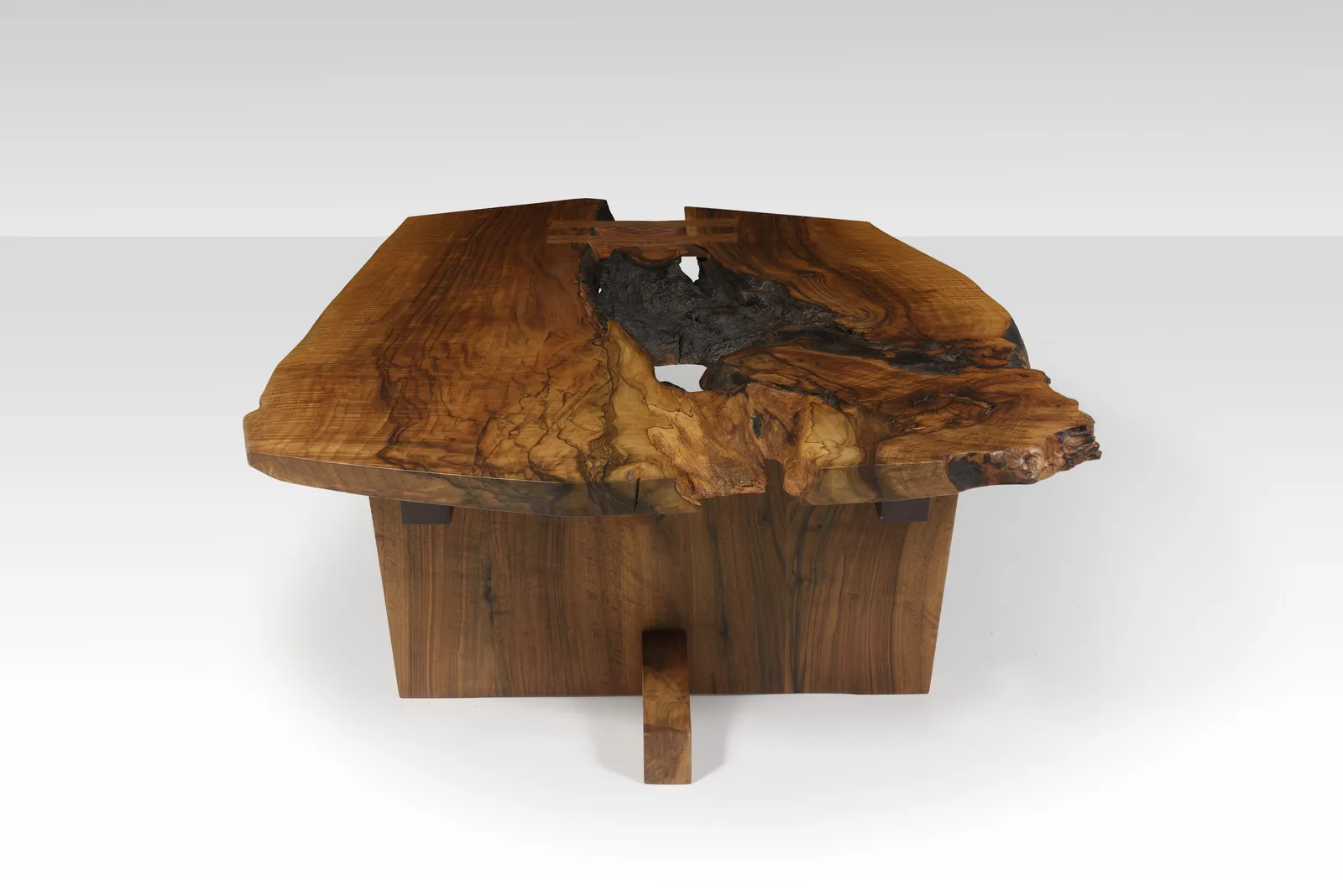
Persian walnut cantilevered coffee table, 1971
Persian walnut
40.6 x 122 x 91 cm
16 x 48 x 35 7/8 in
16 x 48 x 35 7/8 in
Further images
-
(View a larger image of thumbnail 1
)

-
(View a larger image of thumbnail 2
)

-
(View a larger image of thumbnail 3
)

-
(View a larger image of thumbnail 4
)

-
(View a larger image of thumbnail 5
)

-
(View a larger image of thumbnail 6
)

-
(View a larger image of thumbnail 7
)
-
(View a larger image of thumbnail 8
)

-
(View a larger image of thumbnail 9
)


This cantilevered coffee table in Persian walnut, designed in 1971, exemplifies George Nakashima’s philosophy: sculptural yet functional, deeply rooted in the material’s integrity. The cantilevered construction creates a visual suspension...
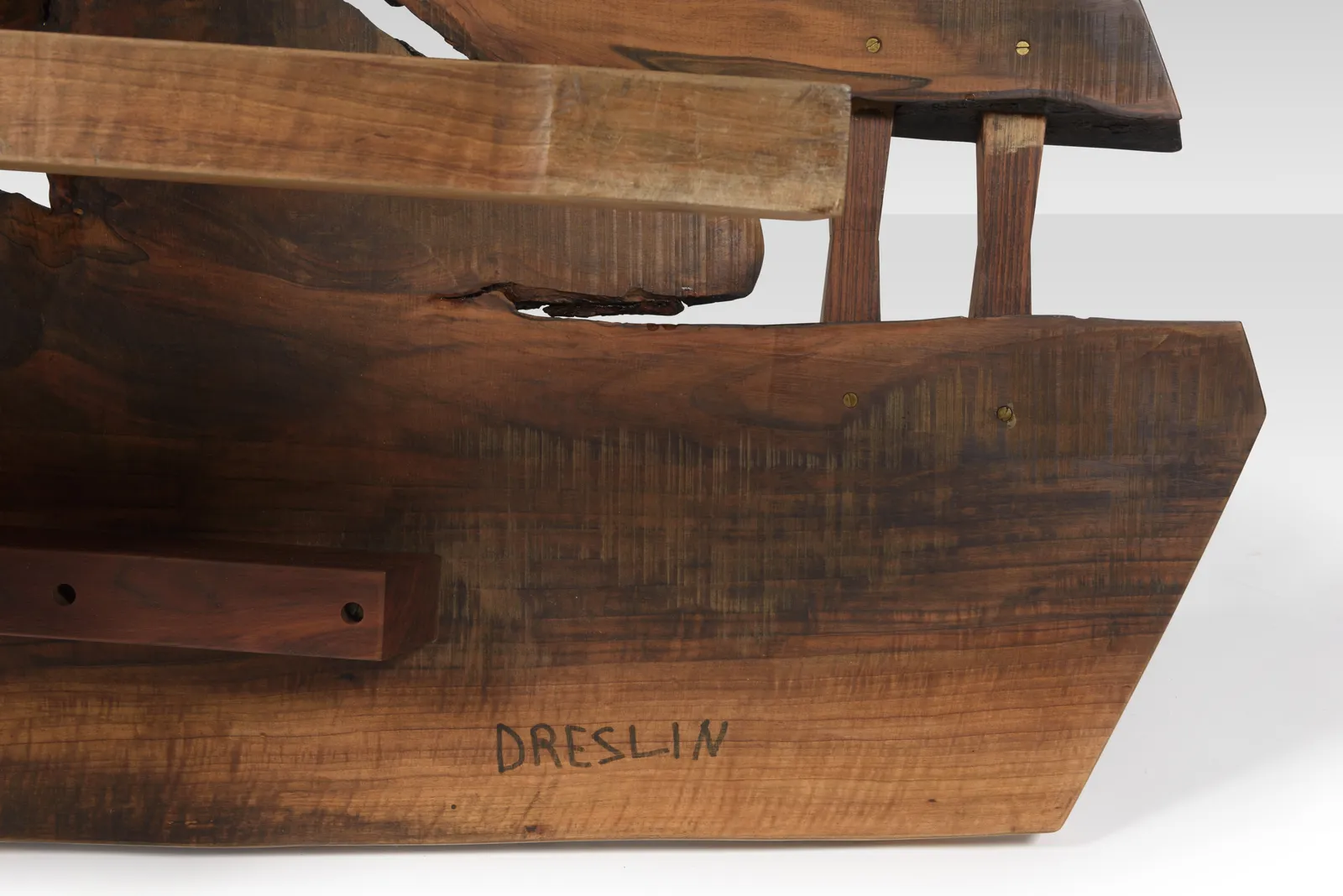
This cantilevered coffee table in Persian walnut, designed in 1971, exemplifies George Nakashima’s philosophy: sculptural yet functional, deeply rooted in the material’s integrity. The cantilevered construction creates a visual suspension effect, emphasizing the contrast between mass and levitation. The expressive grain of the wood is preserved and celebrated through minimal intervention and refined craftsmanship. This piece reflects the designer’s commitment to traditional joinery, natural finishes, and the spiritual dimension of wood. It aligns with the 1970s emergence of studio furniture as a form of collectible design beyond industrial production.
A key feature of many Nakashima designs is the use of butterfly joints, alternatively known as bow-ties. These joints serve a dual purpose—they add a unique aesthetic dimension while also performing a practical function. They are used to join pieces of wood together and to stop cracks from spreading. In doing so, they not only let Nakashima incorporate the tree’s most dramatic elements without compromising the structural soundness of his work but also bolstered his design methodology.
A key feature of many Nakashima designs is the use of butterfly joints, alternatively known as bow-ties. These joints serve a dual purpose—they add a unique aesthetic dimension while also performing a practical function. They are used to join pieces of wood together and to stop cracks from spreading. In doing so, they not only let Nakashima incorporate the tree’s most dramatic elements without compromising the structural soundness of his work but also bolstered his design methodology.